
Best Chainsaw Chain for Cutting Dirty Wood, Nails, and Tough Materials (2026 Guide)
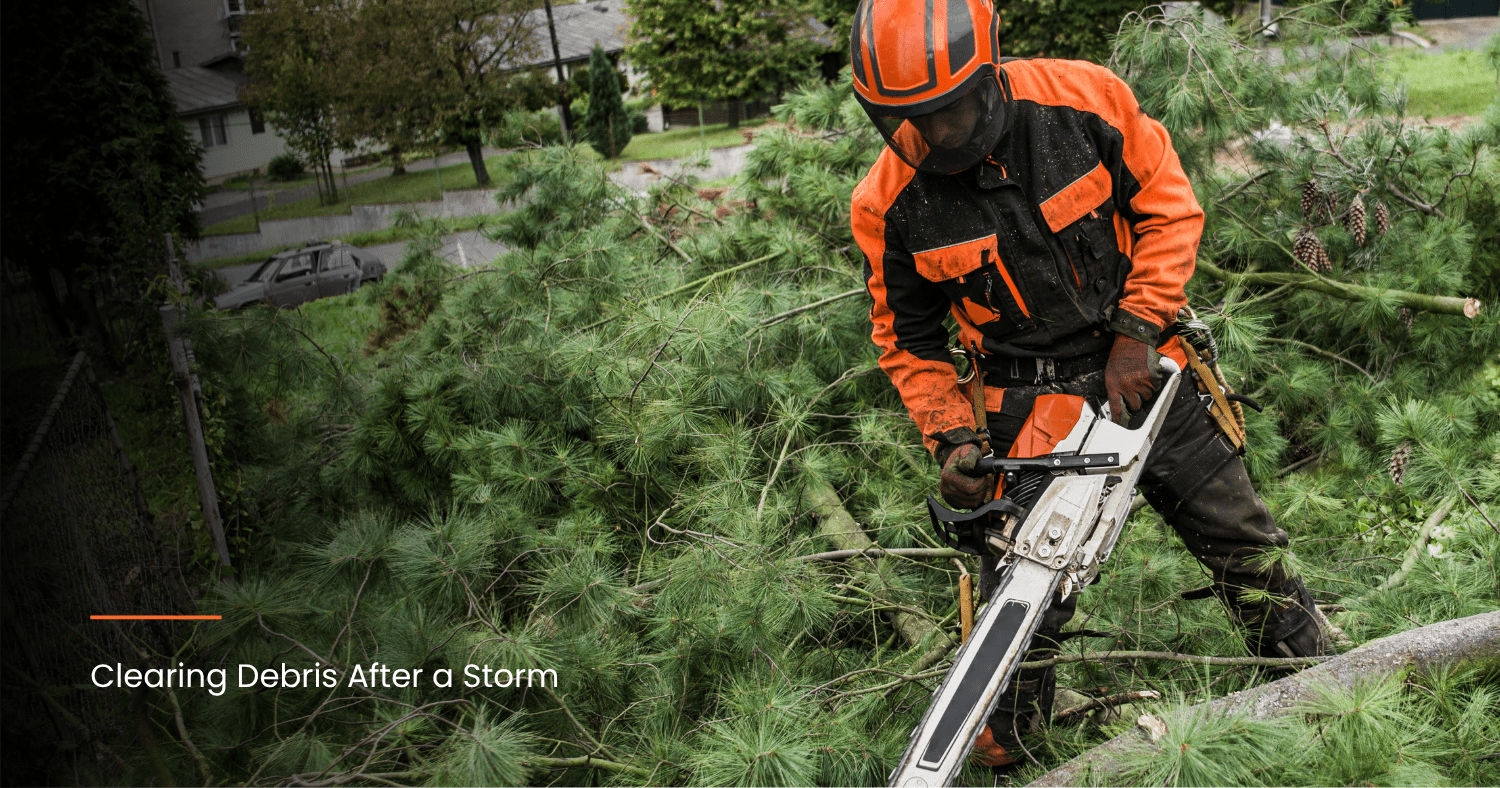
If you’ve ever hit a hidden nail mid-cut or tried to work through storm debris in muddy conditions, you already know what happens next — your chain goes dull fast. Sometimes within minutes. For professionals worldwide, whether you’re an arborist, firefighter, or contractor, that’s not just frustrating. It costs you time, money, and can create real safety risks on the job.
So what’s actually the best chainsaw chain for cutting dirty wood, nails, and tough materials in 2026? Let’s break it down.
Why Standard Chainsaw Chains Fall Short in the Real World
Most chainsaw chains are made from hardened steel, and they perform just fine when you’re cutting clean wood under ideal conditions. But real job sites are rarely ideal.
On a typical day, you might be cutting through dirt and sand embedded in bark, pressure-treated or reclaimed lumber, frozen wood and roots, or storm debris hiding nails, screws, and wire you never saw coming. Steel chains aren’t built for that kind of punishment. They dull quickly when exposed to abrasive or metal-filled materials, which leads to slower cuts, increased kickback risk, burn marks on your wood, and constant downtime for sharpening. If you’re stopping to sharpen multiple times per job, your chain simply isn’t the right tool for your environment.
Carbide-Tipped vs Steel Chains: Which Chain is Right for You?
This is one of the most common questions professionals ask, and the answer really comes down to how and where you’re cutting.
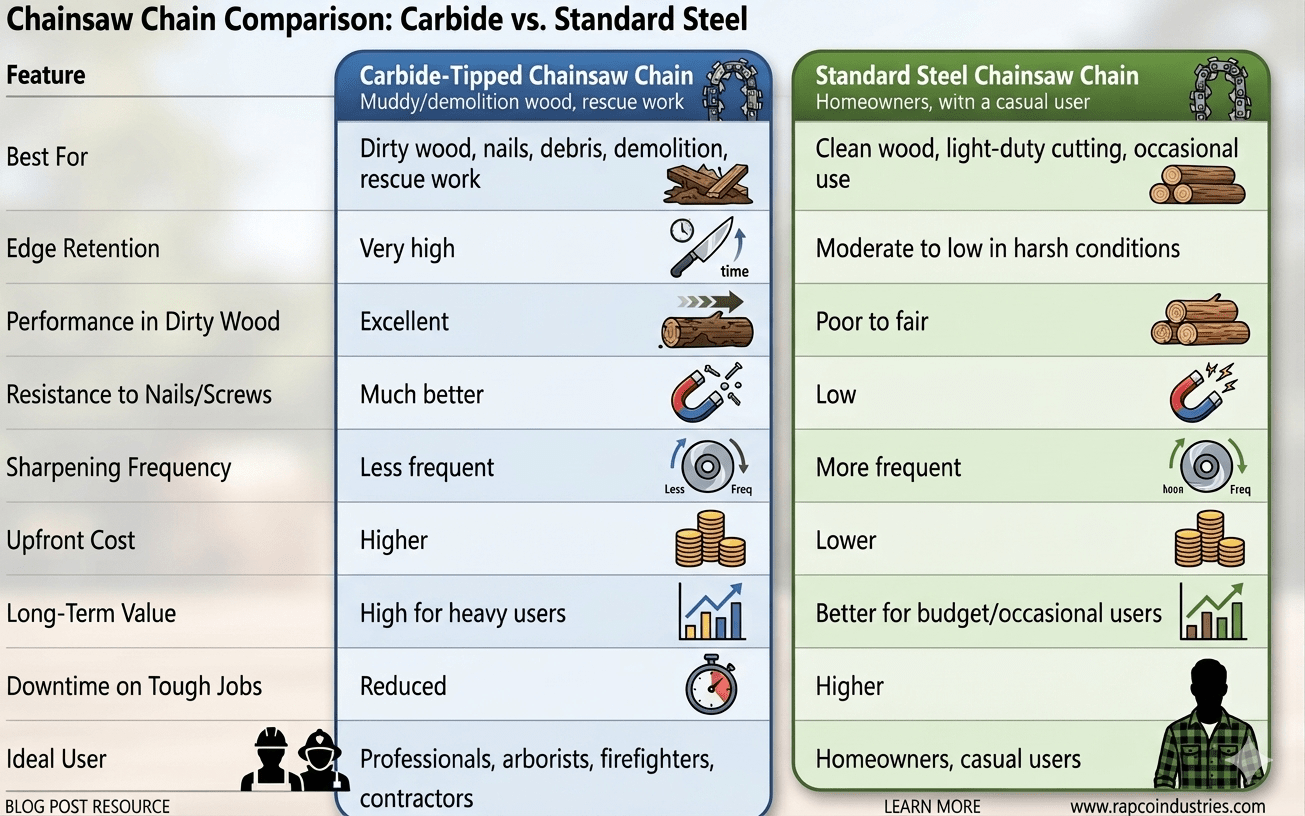
Steel chains are a solid choice for clean wood and occasional residential use. They’re affordable and easy to sharpen, which makes them appealing upfront. The downside is they wear down quickly in abrasive conditions and don’t hold up well against nails or debris. If your work involves anything beyond straightforward cutting, you’ll find yourself replacing or sharpening them far more often than you’d like.
Carbide-tipped chains are a different story. Carbide is significantly harder than steel, which means it resists the kind of wear that comes from dirt, grit, and hidden metal. These chains can take an accidental hit from a nail or screw and keep going, making them the go-to choice for demolition work, disaster cleanup, land clearing, and any professional environment where conditions are unpredictable. The tradeoff is a higher upfront cost and the need for specialized sharpening, but for most professionals, the productivity gains far outweigh those considerations.
Why Carbide-Tipped Chains Make Sense for Tough Jobs
The biggest advantage carbide-tipped chains offer is edge retention. Because carbide is so much harder than steel, it holds a sharp edge through conditions that would destroy a standard chain in minutes. That means fewer interruptions, faster job completion, and lower labor costs over time.
They’re also built to handle contact with nails, screws, and wire — the kind of hidden hazards that are common in demolition, reclaimed lumber cutting, and storm debris cleanup. For fire and rescue teams who need reliable cutting through structures and vehicles, or for arborists dealing with dirty bark and root systems near the ground, carbide-tipped chains provide the consistency and durability that steel simply can’t match.
And while the upfront investment is higher, carbide-tipped chains tend to pay for themselves. Fewer replacements, less downtime, and more cuts per chain add up quickly, especially if you’re running a crew or working on large-scale jobs.
Explore Rapco’s carbide chainsaw chain lineup for tough applications.
Getting the Right Fit for Your Saw
Even the best chain won’t perform well if it doesn’t match your saw. Before purchasing, make sure you know your bar length, chain pitch, gauge, and drive link count. Using the wrong size affects both performance and safety, so it’s worth double-checking before you buy.
Once you have the right chain, a few simple habits will help it last even longer. Keep proper tension to prevent uneven wear, use quality bar oil to reduce heat and friction, and let the chain do the work rather than forcing cuts. After heavy use in dirty conditions, a quick cleaning goes a long way toward removing abrasive buildup and keeping the chain performing at its best.
The Bottom Line
If you’re cutting clean wood on a casual basis, a steel chain gets the job done. But if your work involves dirty wood, nails, harsh job site conditions, or any kind of professional workload, a carbide-tipped chain is the smarter investment. It lasts longer, performs better under pressure, and costs less over time when you factor in reduced downtime and fewer replacements.
The best chainsaw chain isn’t about finding the cheapest option — it’s about finding the right one for your environment. And for most professionals working in real-world conditions, that means choosing a chain built for toughness.
Ready to upgrade? Explore Rapco’s professional-grade carbide-tipped chains designed for extreme cutting conditions at rapcoindustries.com.
Frequently Asked Questions
What is the best chainsaw chain for cutting dirty wood?
A carbide-tipped chainsaw chain is usually the best choice for dirty wood because it holds its edge longer in abrasive conditions like dirt, sand, and storm debris.
Can a chainsaw chain cut through nails?
A carbide-tipped chain handles accidental contact with nails and screws much better than a standard steel chain. It is a better fit for demolition, reclaimed wood, and emergency cutting.
Is a carbide chainsaw chain better than steel?
For clean wood and light use, steel is often fine. For tough materials, dirty wood, and professional workloads, carbide is usually the better option because it lasts longer and reduces downtime.
Are carbide chains worth the higher cost?
Yes, for many professionals. The upfront cost is higher, but the longer life and reduced sharpening often make carbide more cost-effective over time.
What chain works best for storm cleanup?
A heavy-duty carbide-tipped chain is often the best choice for storm cleanup because it performs better when cutting debris-contaminated wood and other unpredictable materials.