
Carbide Chainsaw Chain Review: Is It Really the Best Chainsaw Chain?
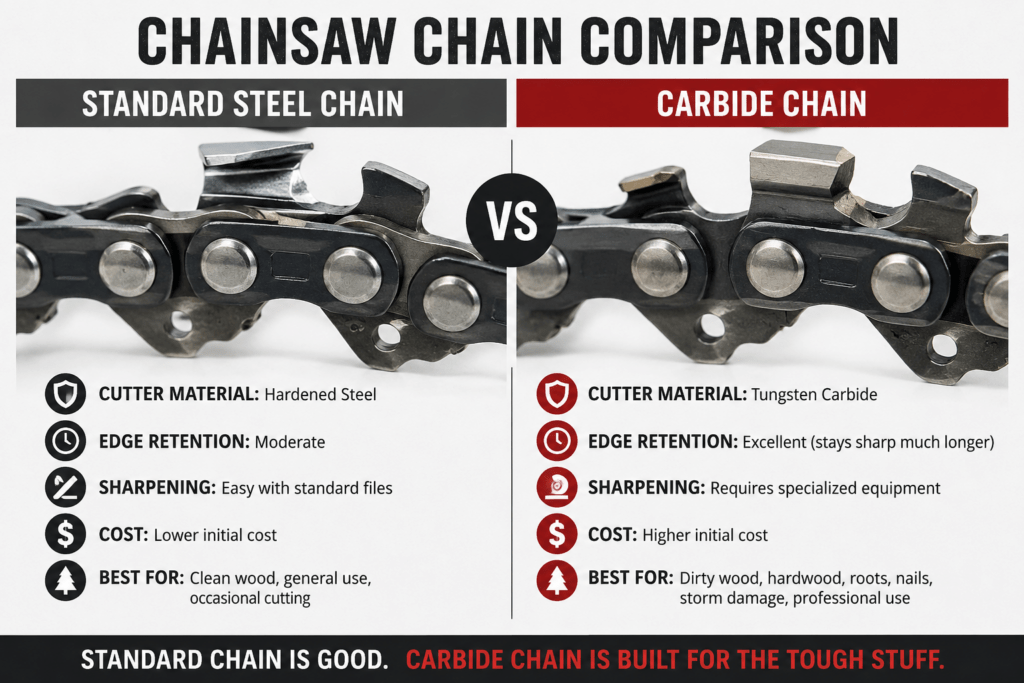
If you cut dirty wood, hardwood, frozen timber, roots, storm debris, or demolition materials, a carbide chainsaw chain can dramatically outperform a standard steel chain. The biggest advantage is edge retention — carbide chains stay sharp far longer in abrasive conditions where traditional chains dull quickly.
But are they really the best chainsaw chain for every user?
The answer depends on what you cut, how often you cut, and how much downtime you can afford. In this carbide chainsaw chain review, we’ll break down the pros, cons, real-world performance, and whether a carbide chain is worth the investment.
What Is a Carbide Chainsaw Chain?
A carbide chainsaw chain uses tungsten carbide cutting edges instead of traditional hardened steel cutters. Carbide is an extremely hard material commonly used in industrial cutting tools because it resists wear and abrasion far better than steel.
Standard chains are excellent for clean wood and general homeowner use. However, once dirt, sand, bark contamination, roots, nails, or frozen wood enter the equation, steel chains lose their edge quickly. That’s where carbide chains excel. They’re specifically designed for dirty wood, burnt timber, hardwood, stump cutting, demolition work, utility crews, fire rescue operations, and storm cleanup. For professionals working in harsh conditions, carbide chains can significantly reduce sharpening frequency and downtime.
Who Should Use a Carbide Chainsaw Chain?
Not every chainsaw owner needs a carbide chain. But for certain applications, they can be a game-changer.
Arborists and tree service crews frequently encounter dirty bark, embedded debris, fence lines, and storm-damaged timber. Carbide chains stay sharper longer in these abrasive conditions, keeping crews productive through long workdays. Firefighters and rescue teams face an even more demanding scenario — rescue saw operators often cut through roofing materials, nails, shingles, and mixed debris where standard chains dull almost immediately. Rapco’s Terminator Saw Chain is engineered specifically for these life-safety applications.
Farmers and ranchers deal with fence rows, roots, and ground-level cutting that destroys standard chains quickly. Demolition contractors face contaminated wood, hidden fasteners, and abrasive materials that wear down traditional chains at an accelerated rate. Even homeowners whose properties involve dirty timber, hardwood, or storm cleanup can benefit — a carbide chain often saves considerable time and frustration compared to constantly sharpening or replacing standard chains.
Carbide Chainsaw Chain Review: Pros and Cons
The Case For Carbide
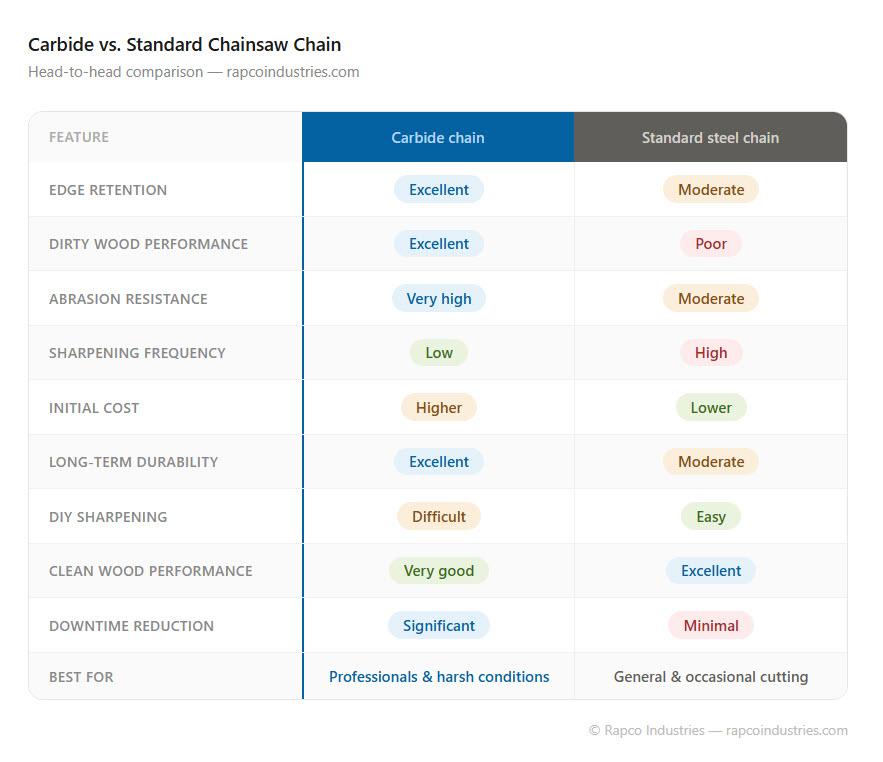
The biggest benefit is longevity. Carbide chains remain sharp significantly longer than steel chains in difficult cutting conditions, and that edge retention compounds over time. Fewer stops to sharpen means more productivity per day, which matters considerably for professionals billing by the job. Although carbide chains cost more upfront, they can last much longer under heavy use — reducing both chain replacement frequency and the labor cost of sharpening. Dense hardwoods and frozen wood are notoriously hard on standard chains, and carbide maintains cutting performance in those materials where steel quickly gives up.
The Honest Tradeoffs
Carbide chains are more expensive than traditional chains, and sharpening them is more involved. Carbide requires specialized grinding equipment and techniques — most users cannot sharpen them properly with standard round files, and improper sharpening can actually damage the cutters. Many professionals send carbide chains to specialized sharpening services rather than attempting it in the field. It’s also worth noting that in perfectly clean wood, some carbide chains may cut slightly slower than aggressive steel chains. For homeowners cutting occasional clean firewood once or twice a year, the investment may not make sense.
Carbide vs. Standard Chainsaw Chains
Is Carbide Really the Best Chainsaw Chain?
For many professionals, yes — but the “best chainsaw chain” depends entirely on the application. Carbide chains are best suited for dirty wood, storm cleanup, hardwood, demolition work, rescue operations, commercial cutting, frozen timber, and root cutting. Standard steel chains remain the better choice for clean firewood, occasional homeowner use, easy DIY sharpening, and budget-conscious buyers who cut infrequently.
The reality is that carbide chains are not meant to replace every standard chain. They’re designed to dominate in difficult cutting environments where steel chains wear out quickly. According to the U.S. Forest Service’s chainsaw safety and operations guidelines, chain selection and maintenance are among the most critical factors in both cutting efficiency and operator safety — a point that professionals in demanding environments understand instinctively.
What Most Chainsaw Users Get Wrong
Many chainsaw owners assume that a bigger saw or more horsepower solves their cutting problems, or that all chains perform similarly. That’s simply not true. In many situations, the chain matters more than the saw itself.
A dull chain creates dangerous cutting conditions, increases operator fatigue, reduces cutting speed, burns more fuel, and places additional strain on the saw. The wrong chain can turn a powerful professional saw into an inefficient, frustrating tool. Professionals who regularly cut abrasive materials understand that chain selection directly impacts productivity and profitability — it’s not an afterthought, it’s a strategic decision.
Are Carbide Chains Worth the Money?
For heavy users, often yes. Although the upfront cost is higher, carbide chains save money by reducing sharpening time, lowering chain replacement frequency, minimizing downtime, and maintaining cutting performance longer. For occasional homeowners cutting clean wood once or twice a year, the investment may not make sense. But for professionals or anyone cutting difficult materials regularly, carbide chains frequently pay for themselves over time. Explore Rapco’s full line of carbide chainsaw chain designs to find the right configuration for your specific application.
Best Applications for Carbide Chainsaw Chains
Storm cleanup is one of the most demanding scenarios for any chain. Storm-damaged trees often contain dirt, sand, twisted fibers, roofing debris, and embedded contaminants that would destroy a standard chain within a single job. Carbide handles these conditions with significantly less degradation. Fire and rescue operations require consistent cutting performance even through contaminated materials — there’s no time to stop and sharpen in an emergency. Stump and root cutting at or near ground level destroys conventional chains quickly, as does cutting through burnt or charred timber, which is extremely abrasive and harsh on steel cutters. For commercial tree crews, the cumulative benefit of reduced downtime and longer cutting intervals adds up to real money across an entire season.
How Long Does a Carbide Chainsaw Chain Last?
There’s no universal lifespan because cutting conditions vary dramatically. However, carbide chains commonly last several times longer than standard chains in abrasive environments. Factors that affect lifespan include dirt exposure, cutting technique, chain maintenance, wood species, and sharpening quality. In cutting clean wood, the performance gap narrows, but in dirty conditions, carbide often outlasts steel by a wide margin.
Can You Sharpen a Carbide Chainsaw Chain?
Yes, but the process is meaningfully different from sharpening a standard chain. Carbide is much harder than steel, so standard round files are generally not effective. Specialized grinding equipment is the recommended approach, and improper technique can damage the cutters. Many professionals prefer to send carbide chains to specialized sharpening services rather than risk compromising the edge geometry on an expensive chain. Rapco Industries offers sharpening and repairing of their chainsaw chains. Contact them to find out more at 1-800-959-6130.
Final Verdict: Is Carbide the Best Chainsaw Chain?
If you regularly cut clean firewood, you can go with a steel chain; you will need to sharpen it more often than a carbide-tipped chain. If your work involves dirt, roots, demolition, hardwood, frozen timber, or harsh cutting environments, then a carbide chainsaw chain may absolutely be the best chainsaw chain for your needs.
The key advantage isn’t just durability — it’s productivity. When a chain stays sharp longer, cuts remain smoother, downtime decreases, and work gets done faster. For professionals and demanding applications, carbide chains are often worth the investment many times over. Rapco’s carbide-tipped chains stay sharp up to 25 times longer than a standard chain. So even if you’re cutting clean wood, you will not need to sharpen your chain as often as a standard chain. Rapco Industries is the leading chainsaw chain manufacturer of quality carbide-tipped chains.
Frequently Asked Questions
What is the best chainsaw chain for dirty wood? Carbide chainsaw chains are generally considered the best option for dirty wood because they resist abrasion and stay sharp much longer than standard steel chains.
Are carbide chainsaw chains worth it? For professionals and heavy users, yes. Carbide chains reduce sharpening frequency, improve durability, and perform better in abrasive conditions.
How long does a carbide chainsaw chain last? In dirty or abrasive environments, carbide chains can last several times longer than standard steel chains. Actual lifespan depends on cutting conditions and maintenance.
Can carbide chains cut nails? Some carbide chains can tolerate incidental contact with nails and debris better than standard chains, which dull quickly when hitting metal.
What is the best chainsaw chain for hardwood? Carbide chains are excellent for hardwood because they maintain sharpness longer under heavy cutting loads.
Can you sharpen a carbide chainsaw chain yourself? It’s possible, but carbide requires specialized sharpening tools and techniques. Many users prefer professional sharpening services.
Do firefighters use carbide chainsaw chains? Yes. Fire rescue and emergency crews commonly use carbide chains because they can cut through contaminated and abrasive materials more effectively.
Are carbide chains slower than standard chains? In perfectly clean wood, some carbide chains may cut slightly slower than aggressive steel chains. However, carbide chains maintain their edge much longer in difficult conditions.
What’s the difference between carbide and steel chainsaw chains? The main difference is durability. Carbide chains use tungsten carbide cutting edges that resist wear much better than traditional steel cutters.
Is carbide better for storm cleanup? Yes. Storm debris often contains dirt, sand, bark contamination, and hidden debris that quickly dull standard chains. Carbide chains are better suited for these harsh conditions.